
Powering Education in Sierra Leone
Powering Education in Sierra Leone
Abby Couralis – EducAid Communications Manager
By the end of March 2026, there had been no electricity supply from the national grid in Port Loko District for around 40 days.
This is not uncommon in Sierra Leone, where access to reliable power remains a significant challenge. The national grid is often unstable, with frequent outages and load shedding affecting both public services and households.
Although the country has strong renewable energy potential – particularly solar – access remains limited. Nationally, around 36% of the population has electricity, falling to approximately 6% in rural areas such as Port Loko (UNOPS: 2025).
In education settings, the impact of this is both immediate and practical. Across EducAid’s sites, unreliable electricity meant that the computer lab could only operate for around an hour before shutting down, with no consistent access to internet or device charging. In the intense heat at the end of the dry season, even simple measures such as using a fan were not possible. Once night fell, sites were dark, preventing students from continuing to study or read in the evenings.
In the District Education Office in Port Loko, meetings and reporting were regularly disrupted by power outages, limiting officials’ access to the information they needed and ability to support all of the schools in their district.
Access to sustainable electricity affected system wide learning.
Working with NextEnergy Foundation
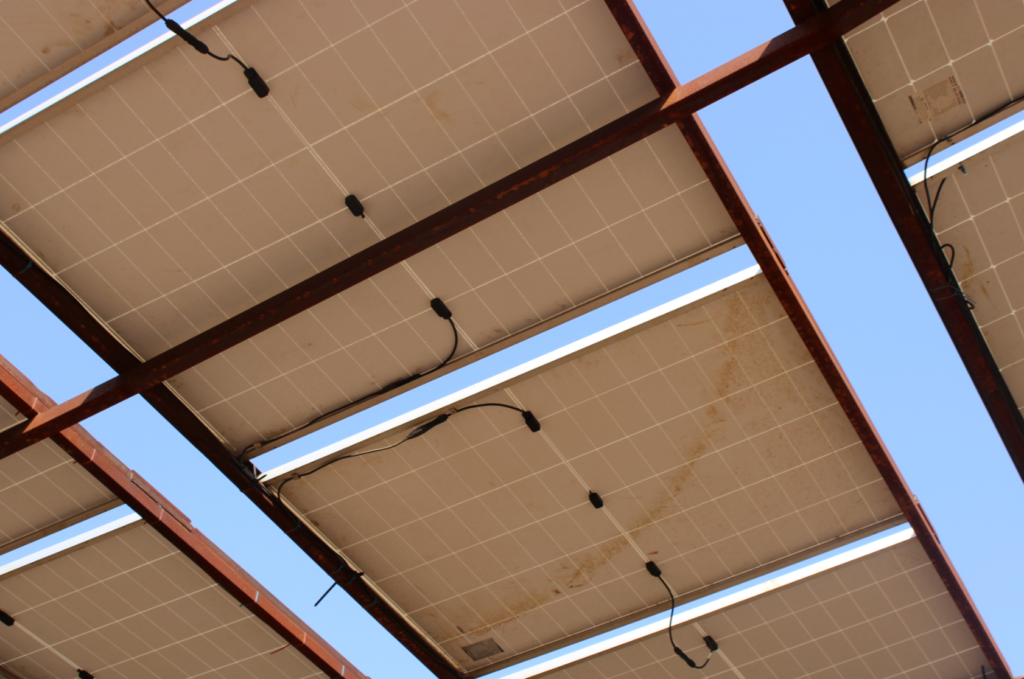
In 2025, with support from NextEnergy Foundation, all of this changed. EducAid installed solar power systems across our three main sites. The aim was to improve sustainability and power reliability so that teaching, learning, and system functions are not interrupted by power cuts or dependent on environmentally damaging methods.
From this initial installation, two further pieces of work followed:
- expansion of solar capacity at Maronka (training centre and office building)
- installation of solar at the MBSSE District Education Office in Port Loko, as part of the District of Excellence partnership with the Ministry of Basic and Senior Secondary Education
These two connected interventions support learning directly by improving access on EducAid’s sites and strengthening the systems that enable learning at scale.
Maronka: from Intermittent Power to Uninterrupted Learning
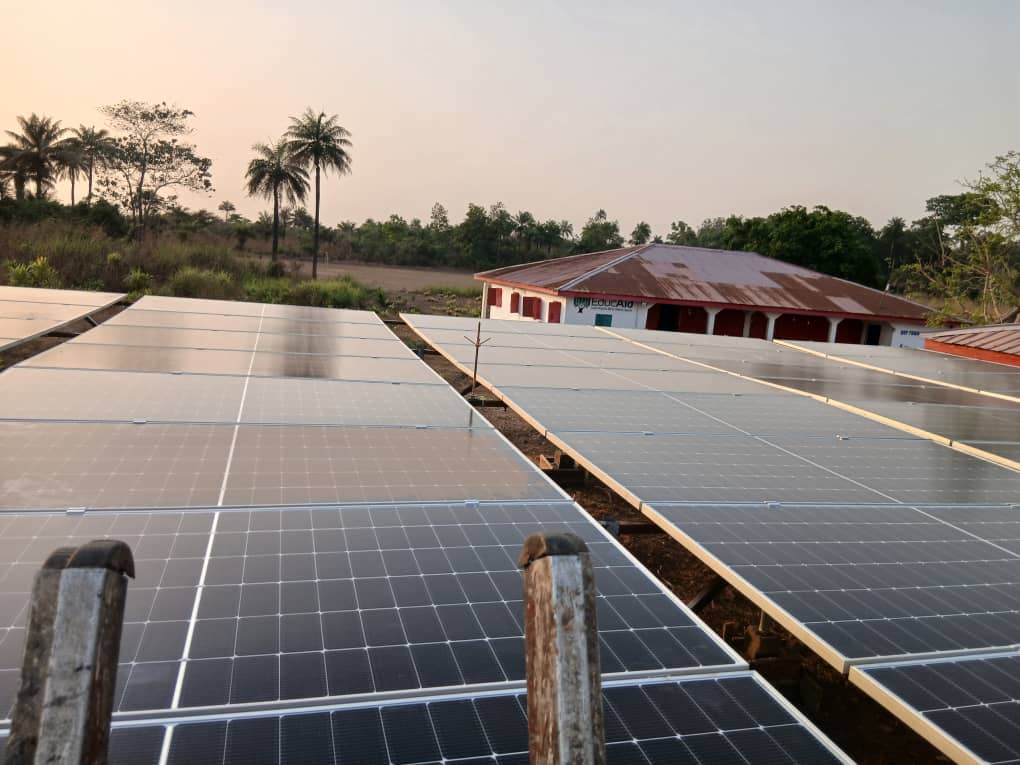
At EducAid’s Maronka site, the difference has been immediate and visible.
The site now runs on stable, continuous electricity. The computer lab operates throughout the day, supporting all 100 students at Maronka to build essential digital skills. Evening study is now possible, extending learning beyond school hours in a structured way rather than being constrained by daylight or fuel availability.
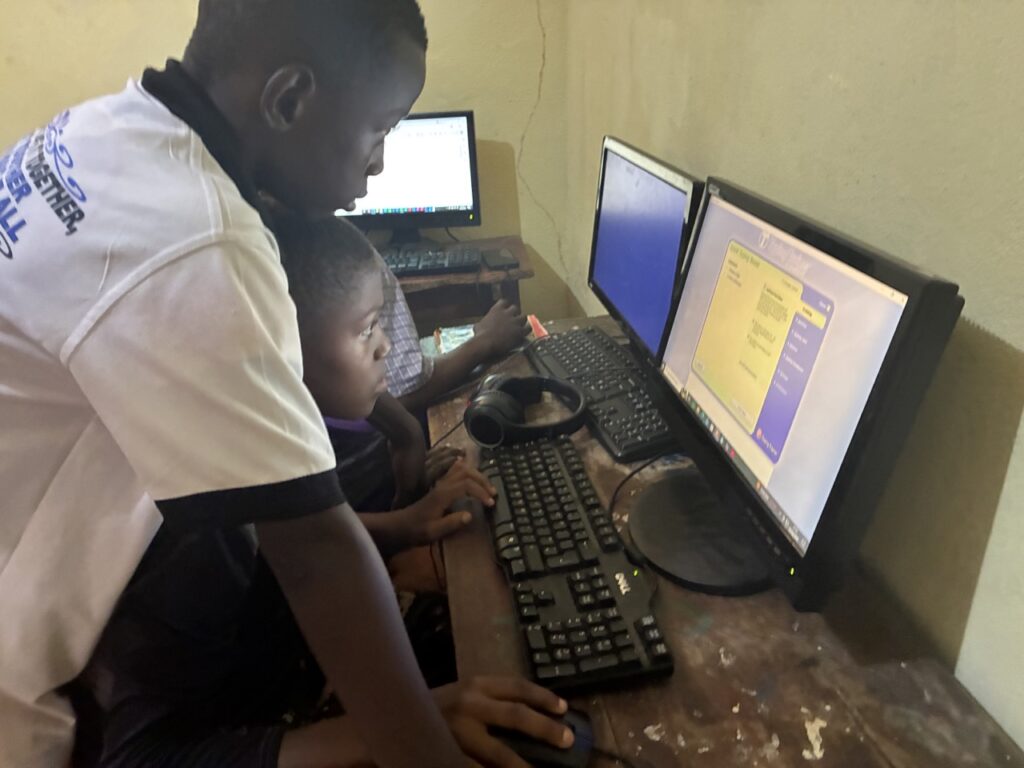
Staff are also able to use internet-enabled tools for planning and lesson preparation, and training sessions now make consistent use of digital materials and projection equipment.
One student told us:
“We are really excited to be able to use the computer lab and learn new skills.” — EducAid Maronka student, March 2026
The wider impact is also important. The site is increasingly able to host meetings and shared learning activities for the surrounding community, whilst showing what is possible when we move to renewable energy.
Port Loko District Education Office: Strengthening Systems
The District Education Office in Port Loko oversees close to 1,000 schools. Its role depends heavily on communication, data, and coordination – all of which require reliable energy.
With the new installation, the office now operates consistently on clean energy. Computers, printers, and internet systems function throughout the day. Staff are able to work without interruption, improving the quality and pace of planning and coordination.
As the Deputy Director of the Ministry for Basic and Secondary Education, explained:
“If you look outside, you can see that we received 24 solar panels for electricity. So in terms of power for this office, we can now say that those challenges have been surmounted. We are now meeting on a weekly basis and are able to solve more challenges than we could before. This is making a direct change on children’s learning.”
— March 2026
The ability to use platforms such as Zoom and Google Workspace has also improved communication across teams. What this represents is not only improved office function, but a stronger link between district systems and classrooms.
Beyond Energy
The impact of solar in these settings goes beyond electricity itself.
Reduced operational pressure
Lower dependence on generators reduces fuel costs, freeing resources for teaching materials, school feeding, and infrastructure.
Environmental impact
Solar reduces emissions and provides a practical example of climate-conscious infrastructure in education settings.
System strengthening
At district level, reliable infrastructure improves the Ministry’s ability to coordinate, monitor, and support schools more effectively.
At the centre of this, students gain more reliable access to learning and we work towards all stakeholders achieving their shared goals of improving education in Sierra Leone.
Looking ahead
The impact of this work is already being felt, with reliable energy beginning to power education in Sierra Leone in practical and meaningful ways. At a time when the entire district had no electricity for 40 days, EducAid’s sites and the District Office were fully functioning with electricity thanks to solar energy, impacting the education of thousands of students. As systems become more stable, schools and education offices are better able to function day to day – from teaching and learning to administration and coordination. Over time, this creates the conditions for a more consistent, effective education system, and demonstrates what is possible through a transition to renewable energy.
EducAid is deeply grateful to the NextEnergy Foundation for their support in making this possible, and for their commitment to strengthening the foundation of education delivery in Sierra Leone. We hope to continue working towards a future where reliable, sustainable energy helps power education transformation across the country.
Find out more about EducAid and the NextEnergy Foundation’s work: https://www.nextenergyfoundation.org/projects/educaid/#year-2026-2